


Accordingly, the Minister suggested focusing on three key priorities: Investing in people and allowing sufficient time for sound ideas to mature; strengthening the linkage between research and enterprises; and transforming international partnerships into joint actions.
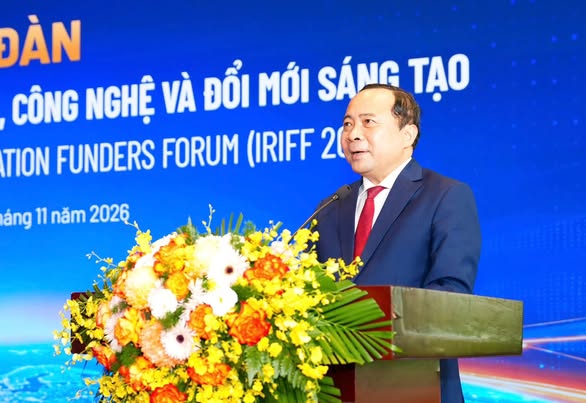
Minister of Science and Technology Vu Hai Quan speaks at the Forum
This message was delivered by Minister Vu Hai Quan at the Viet Nam and International Partners Forum on Science, Technology and Innovation Cooperation (IRIFF 2026), organized by the National Foundation for Science and Technology Development (NAFOSTED) on November 5–6, 2026, in Ha Noi, with the participation of over 300 domestic and international delegates.
Three priorities to elevate international cooperation
In his opening remarks at the Forum, Minister Vu Hai Quan stated that Viet Nam desires to co-create new knowledge, develop technology, and share outcomes with its partners. With that spirit, the Minister proposed that the Forum focus on three main priorities:
First, investing in people and nurturing the development of sound ideas.
Basic research requires stable resources. Young scientists need the freedom to pose novel questions and test bold ideas. Funding mechanisms must be fair, transparent, tailored to each type of research, and ensure accountability in the use of public resources.
Second, strengthening the connection between research and enterprises right from the stage of defining research problems. The State creates favorable conditions. Scientists contribute knowledge and novel solutions. Enterprises participate by defining demands, investing, and bringing results into practice. Success must be reflected in better products, stronger businesses, and improved living standards for the people.
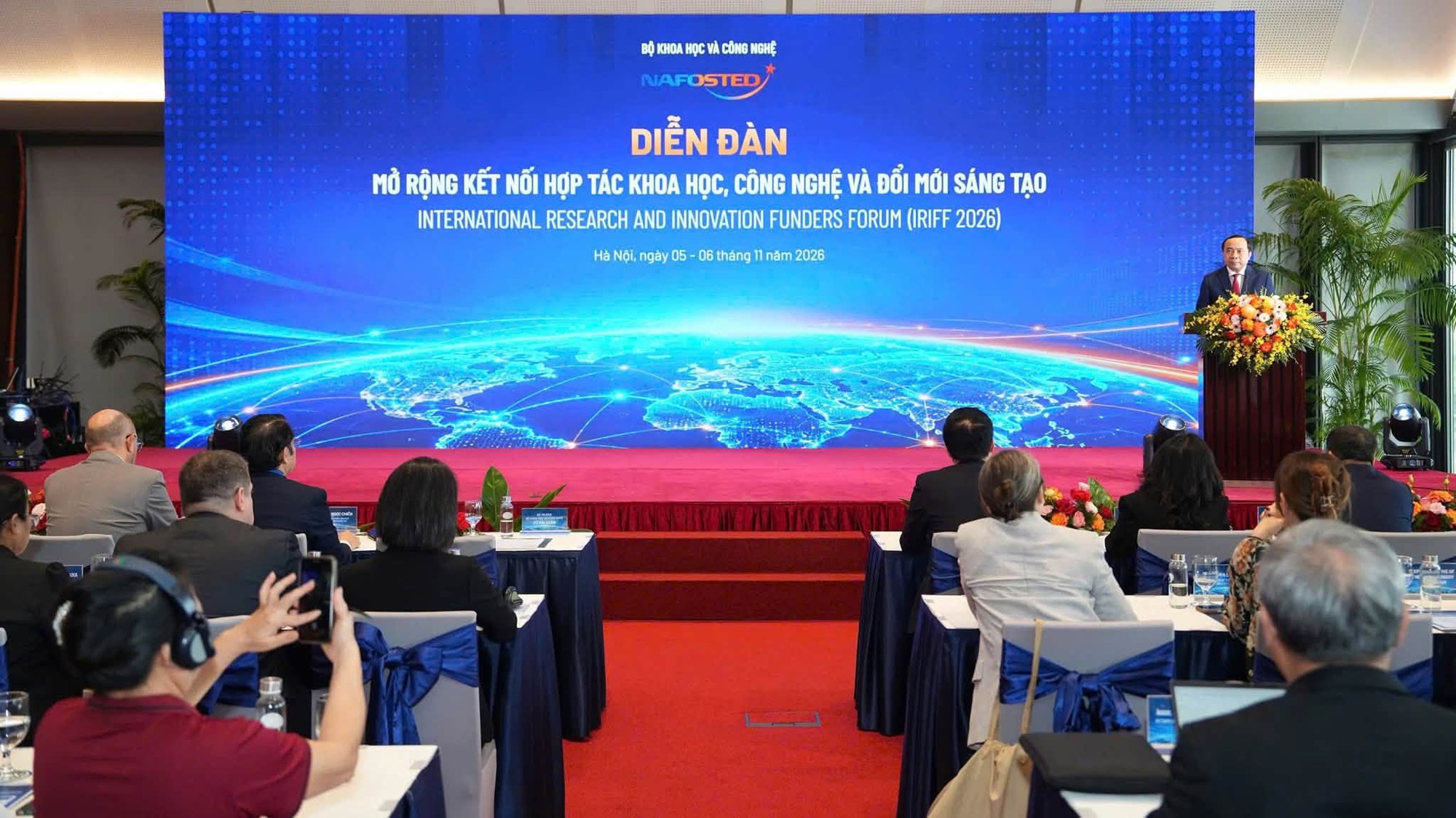
Overview of the working session
Third, turning international partnerships into joint actions. The Minister proposed identifying shared priorities, coordinating calls for research proposals, jointly contributing financial resources, and sharing infrastructure and expertise.
Translating international connections into substantive cooperation programs
Speaking at the Forum, NAFOSTED Director Dao Ngoc Chien noted that international cooperation in science, technology, and innovation is not confined to academic exchanges or network expansion; rather, it is a method to jointly define research questions, combine strengths and infrastructure, share costs and risks, verify outcomes across multiple contexts, and bring knowledge to places where it can generate impact.
Effective cooperation must transcend superficial connectivity models, shifting from isolated meetings to sustainable partnerships; from information exchange to joint program formulation; from separate funding streams to coordinated resource pooling; and from isolated research findings to widely applicable knowledge, technologies, and solutions.
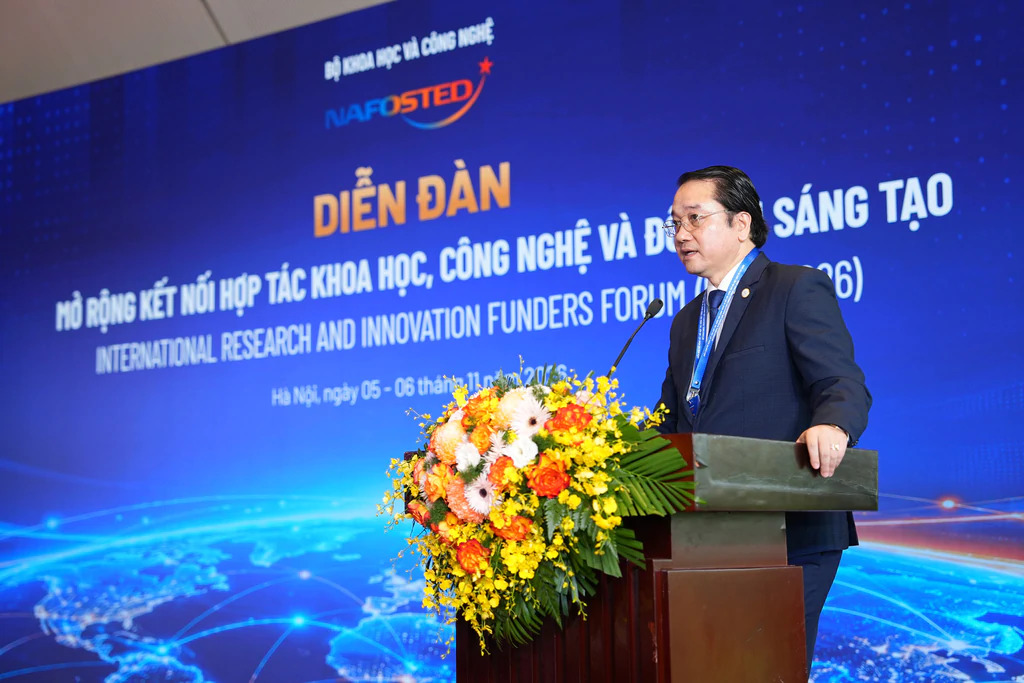
NAFOSTED Director Dao Ngoc Chien expects that the Forum will help identify potential partners, create co-funding opportunities, and coordinate joint calls for research proposals.
Throughout this process, research funding agencies play a vital role by connecting partners, coordinating the design of calls for proposals, standardizing evaluation principles, and facilitating cross-border collaboration among research teams.
NAFOSTED also underscored the imperative of translating the State - Scientist - Enterprise linkage from a strategic orientation into practical reality. The State constructs institutions and supports resources; scientists generate knowledge, technology, and solutions; while enterprises participate in defining needs, co-investing, validating, and adopting outcomes.
Research funding requires a long-term vision
Sharing international cooperation experiences, Swiss Ambassador to Viet Nam Thomas Gass emphasized that scientific breakthroughs often originate from novel ideas that require time and resource investments to mature. Consequently, funding mechanisms must be competitive, grounded in scientific quality, while granting researchers the freedom to explore - even accommodating the possibility of failure.
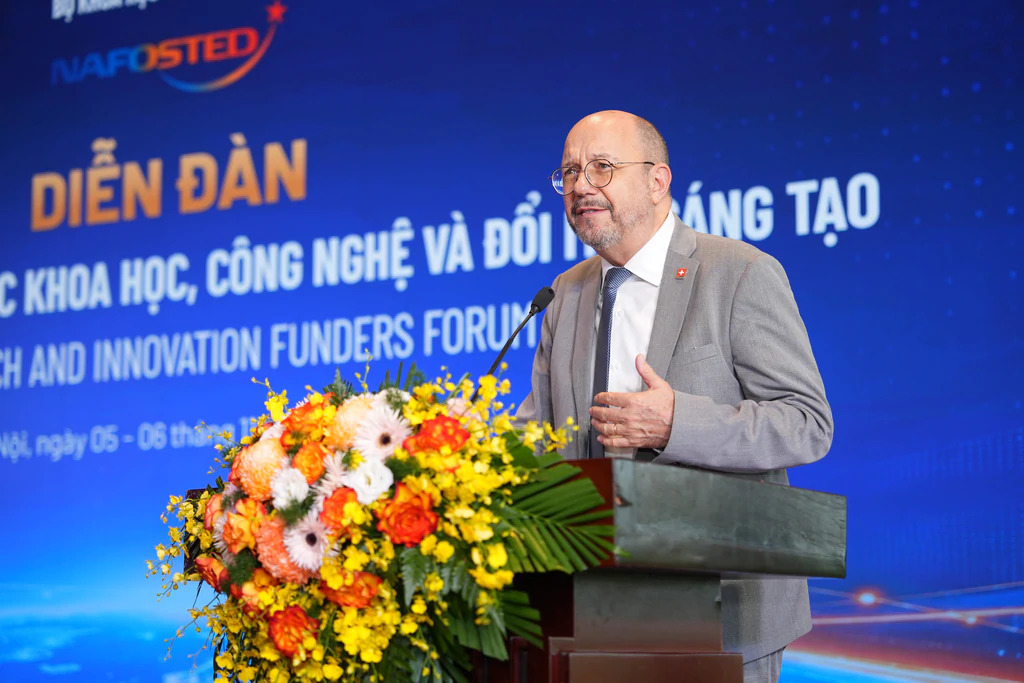
Swiss Ambassador to Viet Nam Thomas Gass speaks at the Forum.
According to the Ambassador, enhanced coordination among the public sector, universities, and enterprises is essential, though research should not be judged solely on immediate commercialization potential, as basic research can yield discoveries that drive transformation over the next 10 to 20 years.
Regarding Viet Nam - Switzerland scientific cooperation, building upon the cooperative framework established in 2020 between NAFOSTED and the Swiss National Science Foundation (SNSF), the two sides have implemented two joint calls for proposals, supporting 20 research projects with a total budget of USD 8 million. Scientists from both nations co-design research questions, proposals undergo joint evaluation, and each foundation funds research teams within its respective jurisdiction.
Ambassador Thomas Gass shared that SNSF and NAFOSTED are exploring the feasibility of organizing a third joint call for proposals in 2027, subject to the finalization of necessary agreements.
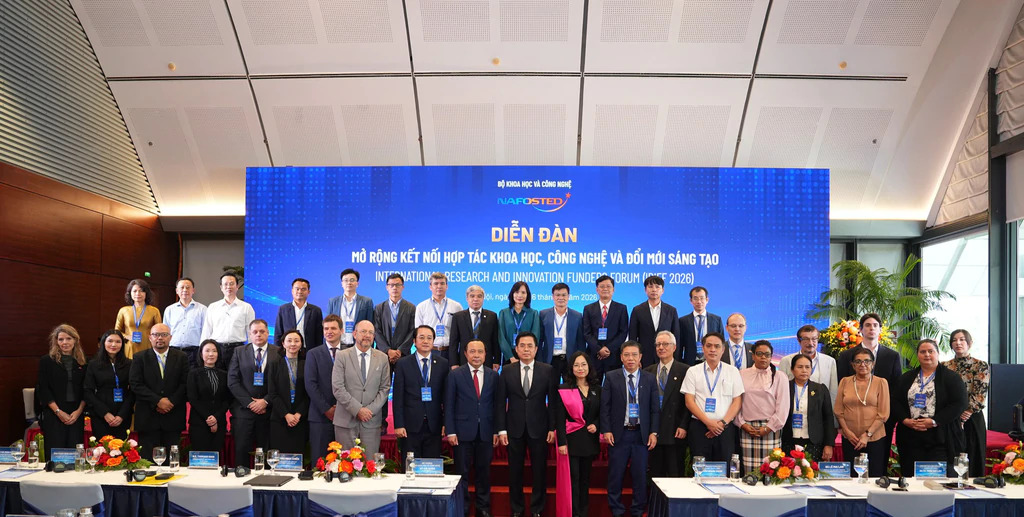
Delegates pose for a group photo
Through talent networking, resource sharing, and experiential exchange, nations can jointly seek solutions to shared challenges. Switzerland looks forward to continuing its accompaniment and support for Viet Nam's development in science, technology, and innovation for the mutual benefit and sustainable growth of both countries.
Within the framework of IRIFF 2026, delegates focused discussions on four thematic areas: Fostering excellence in research; Promoting the State-Scientist-Enterprise linkage; Transferring strategic technologies; and Enhancing integrity in scientific research.
On November 6, 2026, the Forum continued with a roundtable session among international research funding agencies, exchanging experiences on management models, funding mechanisms, and the potential to establish joint research programs.
Delegates also conducted field surveys at the Hanoi High-Tech Park and industrial zones, visiting the Viet Nam Institute of Science and Technology (VKIST) and FPT University./.
