


On November 5, 2026, the Viet Nam Atomic Energy Institute (VINATOM), in collaboration with the Japan Atomic Energy Commission (JAEC), the Tokyo Institute of Technology, the University of Tokyo, and VREC Company, held a scientific seminar themed "Toward safe and sustainable management of NORM via circular economy and resource valorization."
The seminar focused on the safe management of NORM waste while exploring technological solutions to recover valuable components, thereby reducing the volume of waste requiring storage or landfill disposal in Viet Nam.
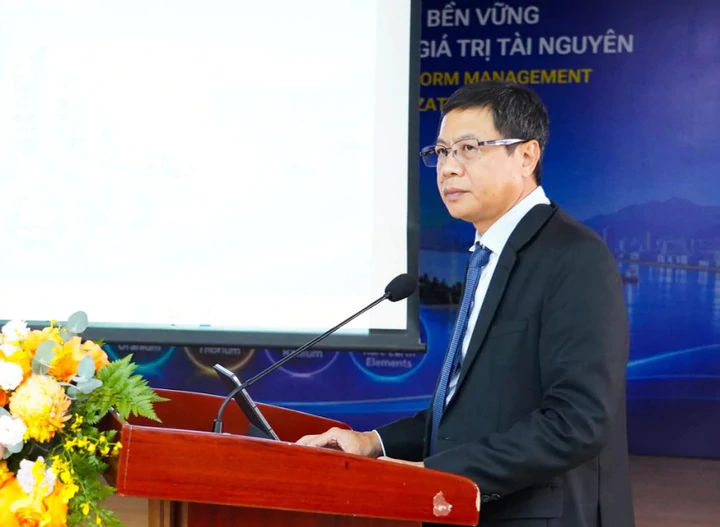
Deputy Minister of Science and Technology Le Xuan Dinh speaks at the seminar.
Addressing the event, Deputy Minister of Science and Technology Le Xuan Dinh underscored the pivotal role of science and technology in tackling waste management challenges arising from strategic mineral mining, particularly NORM.
According to Deputy Minister Le Xuan Dinh, applying technology to extract valuable co-occurring elements represents a strategic approach to turning waste into resources, easing treatment burdens, and progressively fostering a circular economy.
To realize this goal, sustained and long-term efforts are essential to ensure that solutions are not only technologically feasible but also economically viable and compliant with environmental protection standards.
The Ministry of Science and Technology of Viet Nam expects that extensive collaboration between Viet Namese and Japanese scientists and experts will help translate these orientations into suitable technological solutions for effective deployment in Viet Nam.
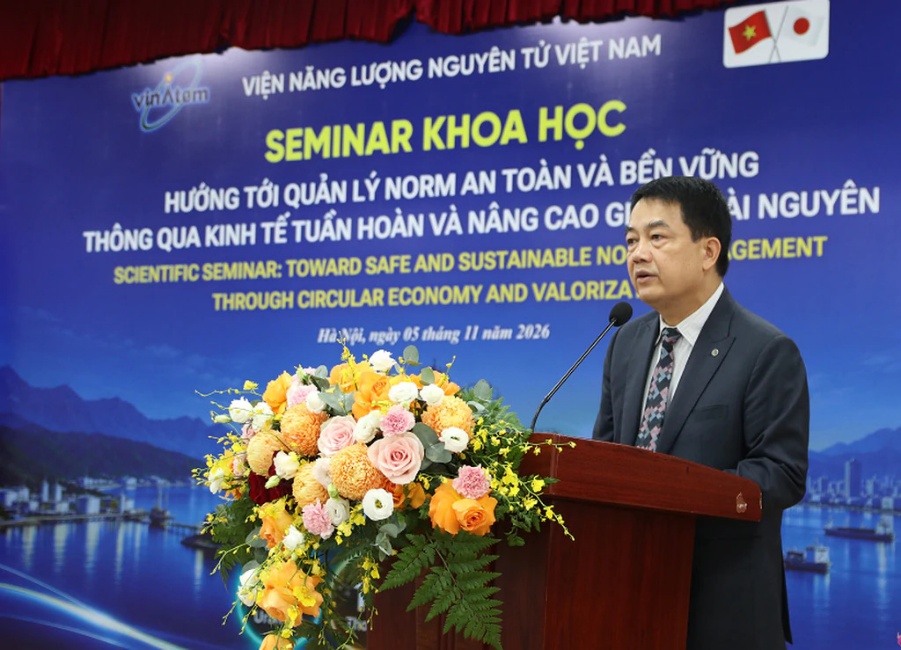
VINATOM President Tran Chi Thanh delivers remarks at the scientific seminar.
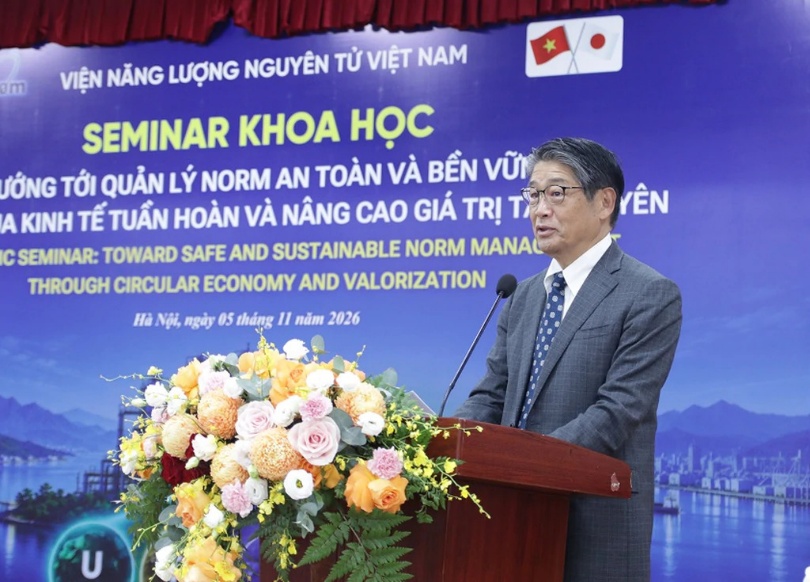
Japanese Ambassador to Viet Nam Naoki Ito speaks at the seminar.
VINATOM noted that NORM waste generated in large quantities from mineral mining contains both strategically important radioactive elements for industry (such as uranium, thorium, and radium) and valuable non-radioactive elements (such as iron, manganese, chromium, and scandium). Separating and recovering these elements creates an ecosystem that benefits three key stakeholders:
(1) For scientists, it helps strengthen their professional capacity through active engagement in research and development;
(2) For regulatory authorities, reduced radioactivity levels enable a transition from traditional storage and landfilling to alternative management approaches, allowing treated residues to be repurposed as materials for other sectors (such as construction and road building);
(3) For enterprises, recovering valuable elements generates added commercial value while lowering waste disposal expenses.
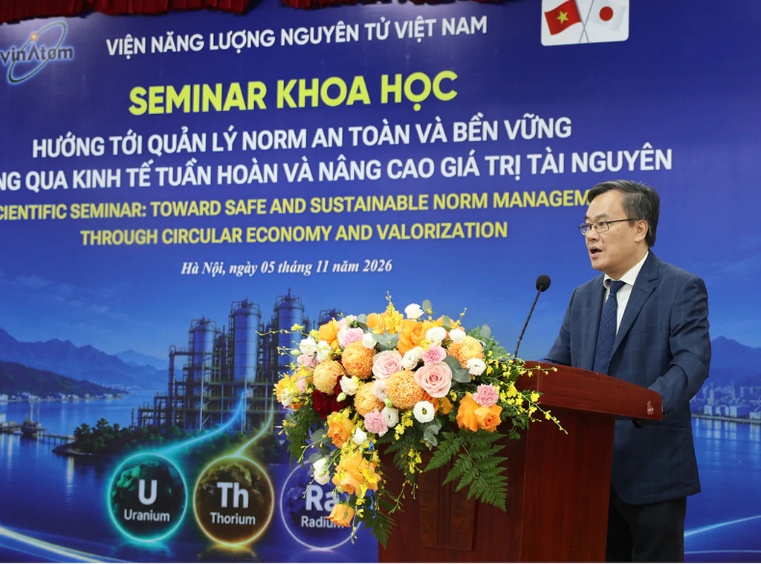
VINATOM Vice President Nguyen Tuan Khai speaks at the seminar.
Furthermore, for regulatory agencies, lowering the radioactivity of waste opens up management alternatives beyond conventional storage and landfilling. The potential reuse of residual materials in sectors such as construction and road building was also raised, strictly tied to radiation safety requirements.
At the seminar, domestic and international regulators, experts, and scientists exchanged experience in the safe management of NORM materials and waste, while updating international guidelines on radiation safety and technologies for recovering and extracting valuable elements.
Discussions centered on the nexus between resource recovery efficiency and safety requirements in waste treatment. Alongside technology selection, delegates analyzed practical challenges facing scientists and enterprise-support agencies when translating solutions into real-world applications.
The potential for resource recovery from NORM waste was examined alongside the need for long-term research. Delegates stressed the importance of close, persistent coordination between Vietnamese and Japanese scientists, backed by support from Ministry of Science and Technology of Viet Nam, to incrementally resolve technological, economic, and environmental challenges.
On this basis, the seminar discussed and proposed long-term cooperation directions between VINATOM and Japanese scientists to develop technical solutions that guarantee radiation safety and improve element recovery efficiency.
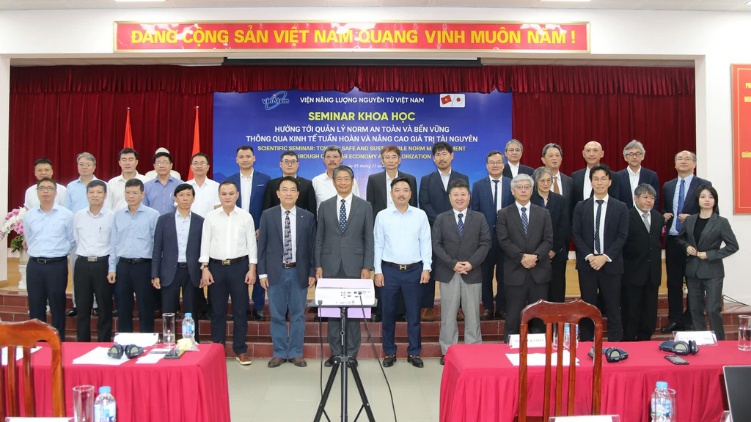
Delegates attend the scientific seminar.
