


On the morning of November 6, 2026, Minister of Science and Technology Vu Hai Quan chaired a working session with the EU-ASEAN Business Council (EU-ABC), the European Chamber of Commerce in Viet Nam (EuroCham), and a high-level European business delegation to discuss cooperation directions in science, technology, innovation, and digital transformation. The business delegation was led by Mr. Noel Clehane, Vice Chairman of EU-ABC and Global Head of Public Policy at BDO.
Speaking at the working session, Minister Vu Hai Quan emphasized that Viet Nam identifies science, technology, innovation, and digital transformation as key pillars of its new growth model. Alongside this, Viet Nam is shifting its mindset in law-making and enforcement from management to developmental facilitation, creating a favorable environment for enterprises to invest, research, and develop technology.
In the high-tech sector, Viet Nam is finalizing preferential mechanisms regarding taxes, land, and R&D investment support, while continuing to reform policies on intellectual property, standards, and metrology to encourage innovation and enhance business efficiency.
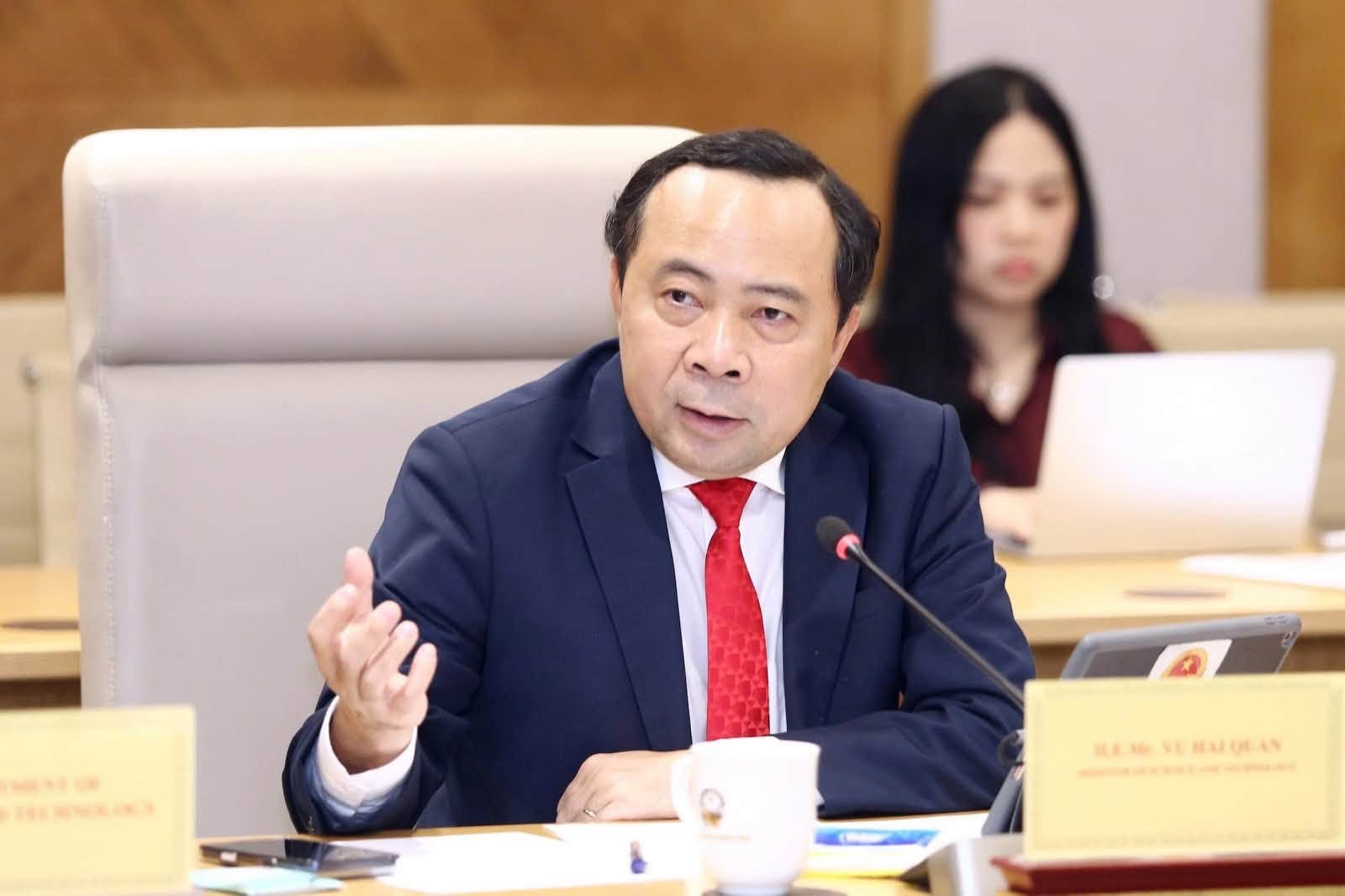
Minister Vu Hai Quan speaking at the working session.
Highly appreciating Viet Nam's orientations and reform efforts, Mr. Noel Clehane thanked the Minister for taking the time to receive the delegation, while acknowledging the role of the Ministry of Science and Technology in promoting the innovation ecosystem, refining the legal framework for AI and intellectual property, and improving the investment and business environment for the European business community.
During the working session, representatives of major corporations and enterprises - such as EVIC, Airbus, ICEYE, Sanofi, DHL Express, Philip Morris International, and L'Oréal - along with specialized business groups, exchanged views, raised questions, and proposed numerous contents related to science and technology development policies and investment activities in Viet Nam.
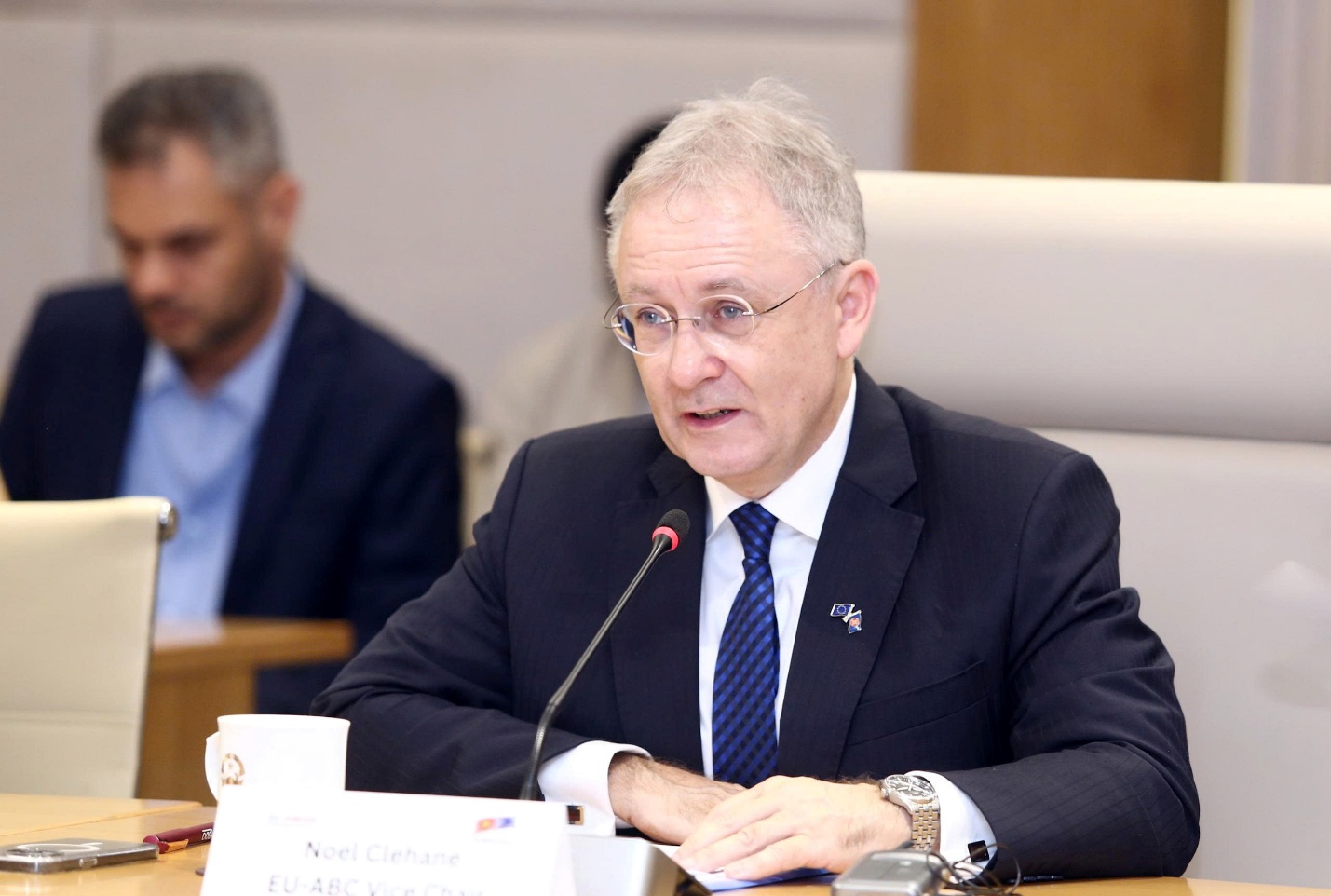
Mr. Noel Clehane, Vice Chairman of EU-ABC and Global Head of Public Policy at BDO, speaking at the working session.
A representative from EVIC, a global specialty chemical corporation from the Netherlands and Germany, requested Ministry of Science and Technology to provide information on policies supporting enterprises in establishing research and development (R&D) centers in Viet Nam, while expanding cooperation with domestic universities, research institutes, and enterprises. EVIC also expressed interest in technology development orientations serving green growth, particularly in new materials, high-tech agriculture, and clean energy.
Mr. Zhao Yao Lam, Director of Public Affairs for ASEAN and Japan, expressed interest in Viet Nam's quantum computing development orientation, the opportunities and risks associated with this technology, and the potential for cooperation with the private sector in technology R&D.
Airbus requested Ministry of Science and Technology to share priorities in implementing the Strategy for Space Science and Technology Development and Application to 2030, particularly the role of Earth observation satellites in climate change response and agricultural productivity enhancement.
Addressing the businesses' recommendations, leaders of specialized units under Ministry of Science and Technology directly exchanged views and clarified current legal regulations, preferential policies on taxes, land, high-quality human resource development, and management coordination orientations in each field.
The discussions focused on ensuring transparency and equality among market participants, while applying risk-based management principles to facilitate innovation, investment, and business activities.
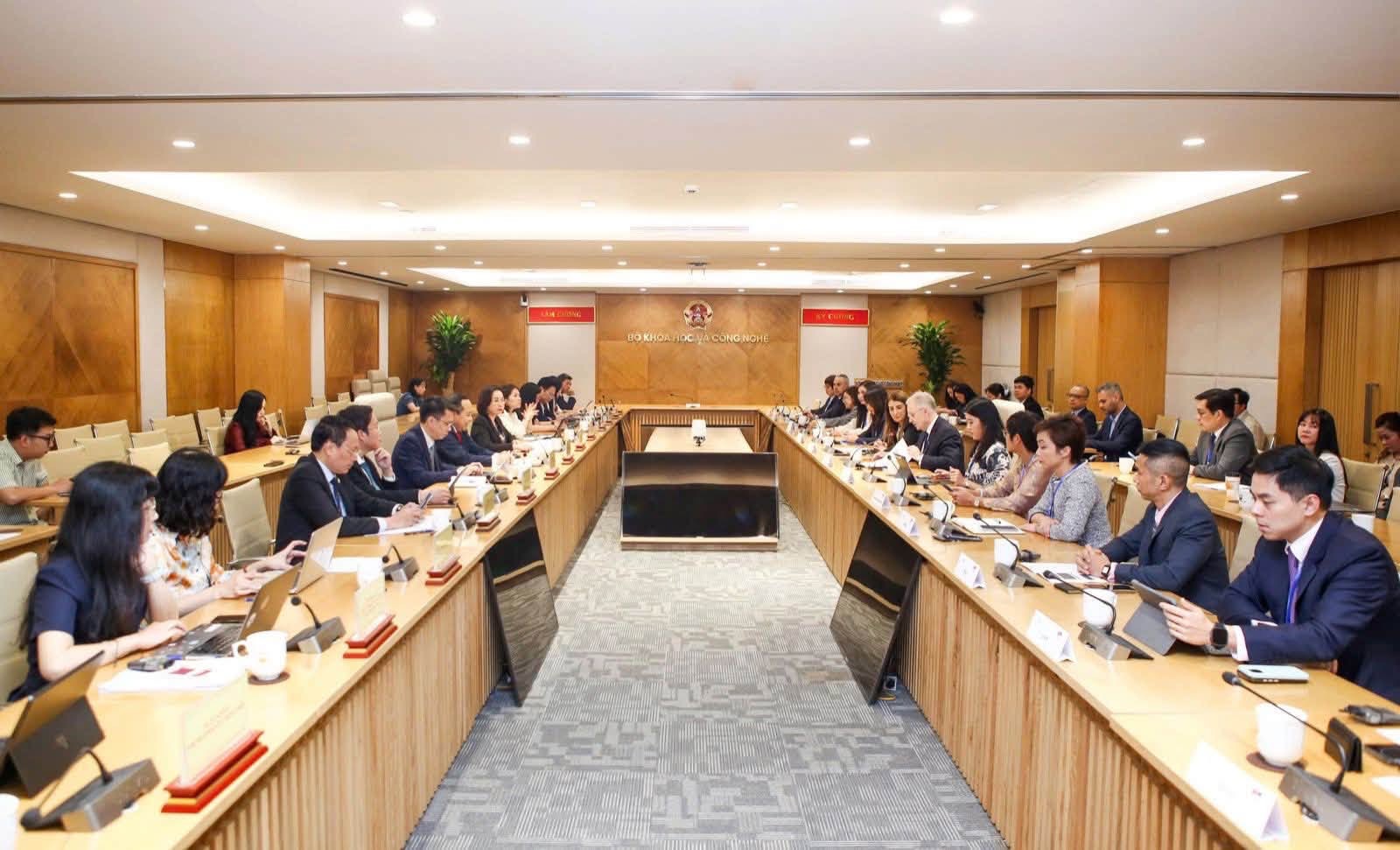
Overview of the working session.
Concluding the working session, Minister Vu Hai Quan emphasized that Viet Nam is transitioning to a growth model driven by science, technology, innovation, and digital transformation, in which enterprises play a central role. The Minister expressed his expectation that European technology enterprises, when investing in Viet Nam, will not only expand production and business operations but also develop research, knowledge transfer, and human resource training, thereby contributing to enhancing Viet Nam's technological mastery capabilities.
Minister Vu Hai Quan stated that Viet Nam prioritizes the development of 10 strategic technology groups, including: digital technology and AI; semiconductor chips; 5G/6G technology; robotics and automation; advanced biomedical technology; advanced energy and materials; cybersecurity and quantum technology; marine and ocean technology; aerospace; and high-speed railways. These fields open up extensive cooperation opportunities between Vietnamese enterprises and international partners, including the European business community.
To promote investment in these sectors, Viet Nam is finalizing preferential and support policies for businesses, focusing on research funding, loan interest rate subsidies, shared testing infrastructure development, R&D tax incentives, personal income tax policies for experts, intellectual property support, and the commercialization of research results. Support mechanisms also aim to facilitate testing, certification, and technology product development.
On this basis, the Minister proposed three core cooperation directions with the European business community:
First, coordinating the training and development of high-quality human resources. Enterprises can collaborate with universities to invest in laboratories, support equipment, and provide conditions for students and lecturers to practice and access new technologies, thereby bridging education with practical labor market demands.
Second, promoting the establishment of R&D centers in Viet Nam. Enterprises can start on an appropriate scale, gradually expanding research activities, aligning with corporate development demands, and tapping into domestic human resources.
Third, implementing strategic technology research and development projects. European enterprises can cooperate with Vietnamese research institutes, universities, and businesses to execute joint projects, share risks, and benefit from research outcomes.
The Minister affirmed that Ministry of Science and Technology stands ready to accompany, listen to, and receive recommendations from the business community to continuously refine mechanisms and policies in a development-facilitating direction./.
