


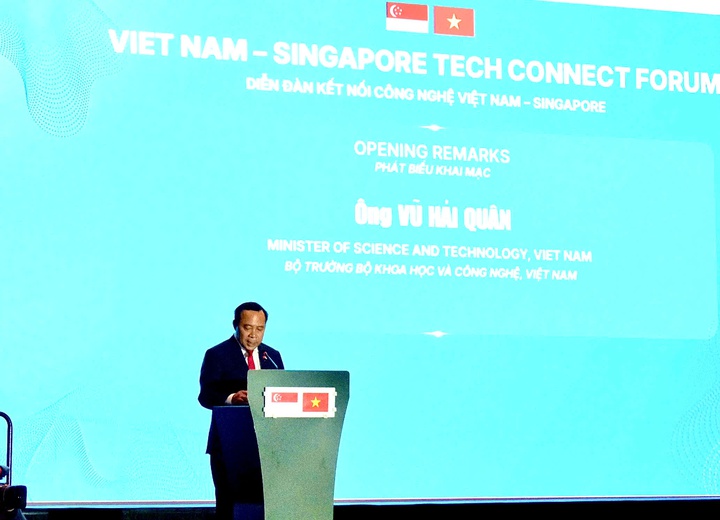
Minister Vu Hai Quan delivered remarks at the forum.
Singapore was a highly important partner for Viet Nam in advancing science, technology, innovation and digital transformation thanks to its strong experience and advanced level of development in technology and innovation.
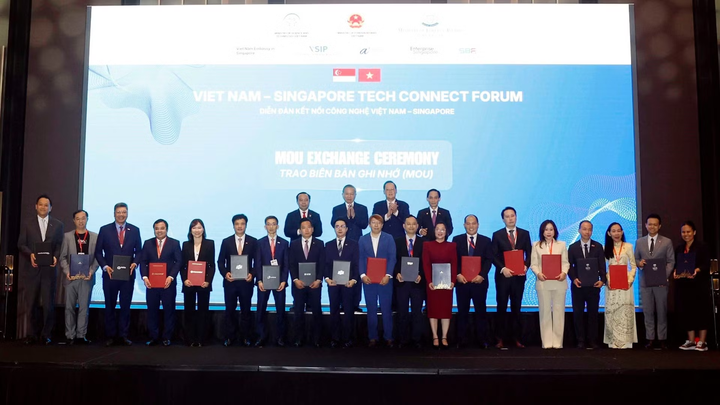
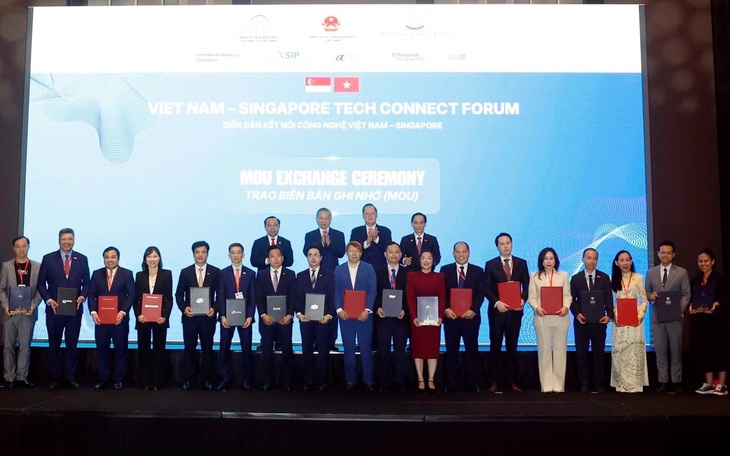
General Secretary of the Communist Party of Viet Nam and State President To Lam and Minister Vu Hai Quan witnessed the exchange of memoranda of understanding between the two countries.
According to Minister Vu Hai Quan, the forum provided an opportunity for the two countries to focus discussions on five priority areas:
- Promoting connectivity between the two innovation ecosystems, particularly in strategic fields such as artificial intelligence, semiconductors, smart manufacturing, biotechnology and green transition.
- Strengthening cooperation among the State, universities, research institutes and enterprises under the "Triple Helix" model, in order to promote applied research, technology transfer and the commercialisation of research outcomes.
- Developing cooperation programmes for high-quality human resources, especially technology talent and innovation talent for the digital economy.
- Creating favourable conditions for technology enterprises, startups and innovation centres of the two countries to connect, expand investment cooperation and jointly participate in regional and global value chains.
- Implementing the orientations set out by General Secretary and State President To Lam on Viet Nam–Singapore cooperation in science, technology, innovation and digital transformation.
Singapore Minister for Manpower and Minister-in-charge of Energy and Science & Technology at the Ministry of Trade and Industry Tan See Leng, in his remarks at the forum, emphasised that the event created a valuable platform for both countries to deepen cooperation and further explore a wide range of new opportunities in science, technology and innovation.
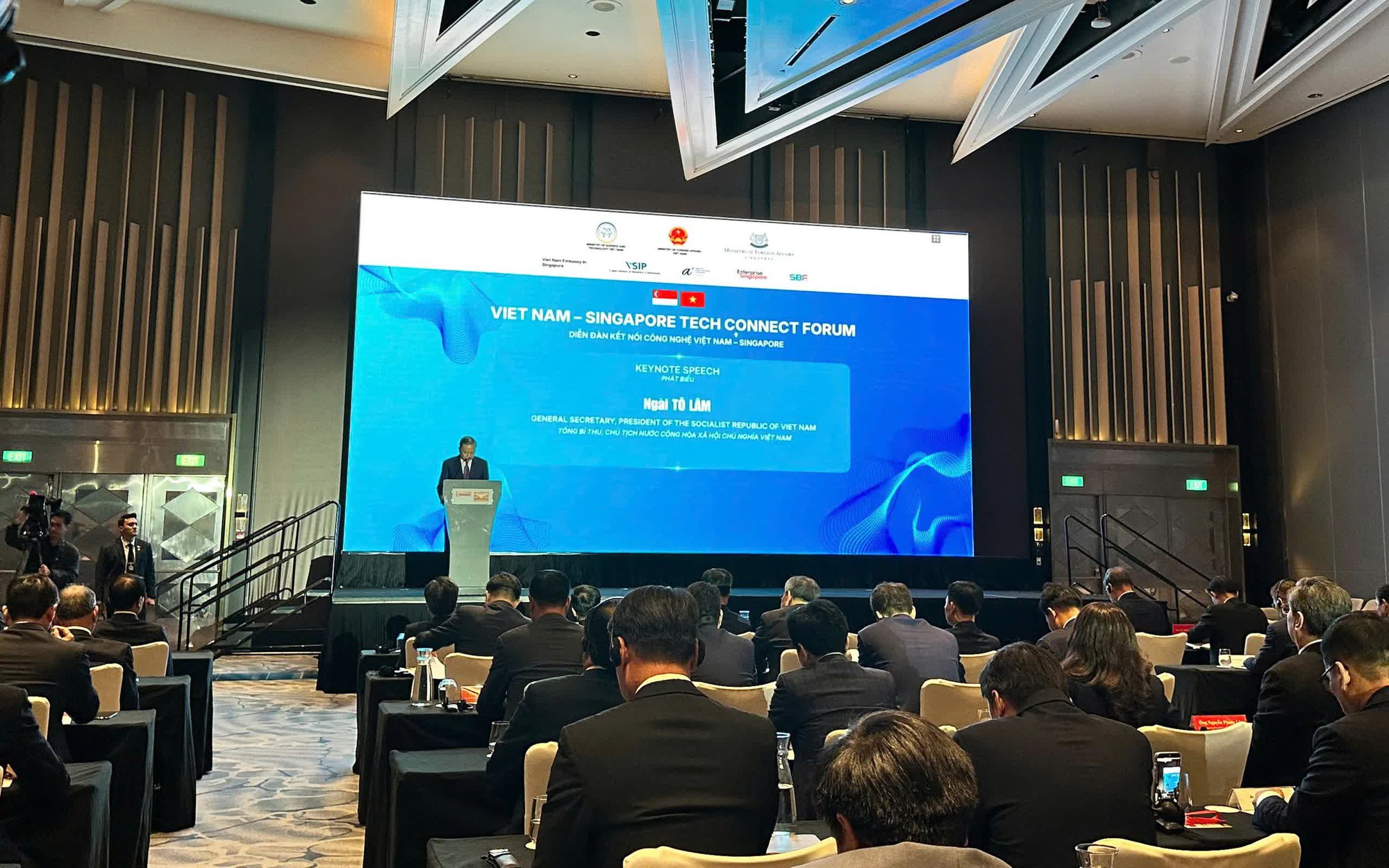
Within the framework of the Viet Nam–Singapore TechConnect Forum, 23 memoranda of understanding were exchanged among enterprises, universities, research institutes and technology partners of the two countries, opening up new opportunities for cooperation in science, technology, innovation, digital transformation, artificial intelligence and high-quality human resource development.
