


Proactively building regulatory capacity from the outset
On October 28, 2026, at the 2026 International Ministerial Conference on Nuclear Power held in Incheon, Republic of Korea, Director General Nguyen Hoang Linh participated as a speaker in High-Level Panel Session 2, themed "Effective regulation: Safety, security, non-proliferation, and harmonization."
The panel discussion focused on the requirements for building a nuclear regulatory system as many countries decide to launch new or expand existing nuclear power programs. Key topics of interest included developing regulatory capacity from the early stages, ensuring coordination among nuclear safety, security, and safeguards, and maintaining the independence and effectiveness of the regulatory body.
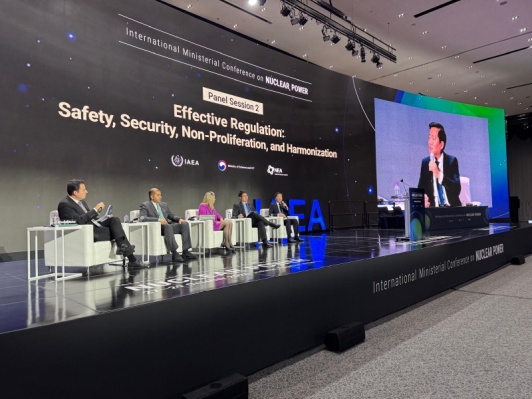
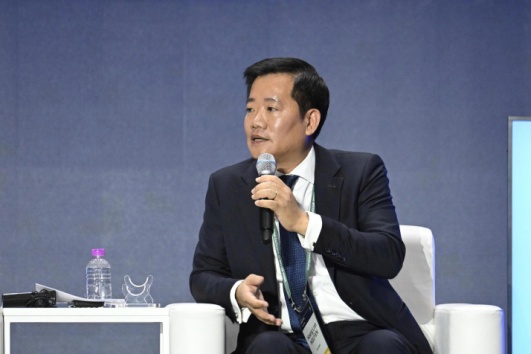
Director General Nguyen Hoang Linh shares Viet Nam’s experience at the High-Level Panel Session on Effective Regulation.
Sharing Viet Nam’s experience since deciding to restart its nuclear power program in 2024, Director General Nguyen Hoang Linh highlighted three concurrent task groups being implemented: refining the legal and nuclear regulatory framework; developing the professional and technical capabilities of the regulatory body; and identifying and addressing gaps in national nuclear infrastructure.
Regarding the refinement of the legal framework, the passage of the Law on Atomic Energy No. 94/2025/QH15 by the National Assembly, which took effect in early 2026, marks a crucial milestone.
Viet Nam is continuing to formulate decrees, circulars, technical regulations, and methodologies for applying technical codes and standards to concretize regulatory requirements. This provides the basis for prospective licensees and the regulatory body to proactively prepare for the deployment stages of the nuclear power program.
With respect to professional capacity development, Viet Nam still faces challenges regarding specialized human resources, calculation and simulation tools, safety analysis capabilities, and safety assessment methodologies.
To meet these demands, Viet Nam has formulated a national program on training and human resources development in the nuclear energy sector through 2035, serving as the basis for systematic recruitment, training, and necessary investments in facilities and technical tools.
Regarding national nuclear infrastructure, Viet Nam invited the International Atomic Energy Agency (IAEA) to conduct an Integrated Nuclear Infrastructure Review (INIR) mission. Based on the mission’s recommendations and proposals, ministries, sectors, project owners, and technical organizations are coordinating to draft a master plan for enhancing nuclear infrastructure in alignment with the IAEA’s Milestones Approach.
Enhancing management effectiveness and ensuring regulatory independence
Addressing coordination in nuclear safety, security, and safeguards management, Director General Nguyen Hoang Linh stated that the Viet Nam Agency for Radiation and Nuclear Safety (VARANS) holds responsibilities across all three areas, facilitating greater consistency in regulatory oversight. However, ensuring management effectiveness requires close collaboration among relevant ministries and sectors.
According to Director General Nguyen Hoang Linh, Viet Nam is continuing to refine regulations to clearly define the functions, duties, and responsibilities of each agency, information-sharing mechanisms, inter-agency coordination procedures for handling cross-cutting issues, and the resolution of overlaps between nuclear safety and security requirements.
A decisive factor in the effectiveness and reliability of a regulatory system is the establishment of a clear, robust legal framework backed by effective enforcement.
A clear regulatory framework helps plant operators identify safety requirements, documentation, and technical evidence needed during the licensing process, while providing the legal basis for the regulatory body to conduct assessments, inspections, and make decisions. This also enables the public to understand how nuclear safety is evaluated and the responsibilities of relevant organizations.
Nevertheless, promulgating legal documents is merely the first step. Enforcement effectiveness ultimately relies on the professional competence, resources, technical tools, and independence of the regulatory body during evaluation, review, and scientific- and technical-evidence-based decision-making. Concurrently, the fundamental principle that the authorized operating organization bears primary responsibility for safety must be upheld.
Director General Nguyen Hoang Linh asserted that the effectiveness of a regulatory framework is reflected in the quality of decisions made on its basis. This is a vital factor in reinforcing public trust while ensuring that the nuclear power program is implemented safely and responsibly./.
