



Delegates press the button to officially inaugurate the National Semiconductor Prototyping Support Center.
Established under Decision No. 4386/QD-BKHCN and directly under the Authority of Information Technology Industry (Ministry of Science and Technology), the Center serves as a shared infrastructure provider covering the entire lifecycle of semiconductor development - from design, prototyping (tape-out), packaging, and testing to product commercialization.
One of the biggest bottlenecks facing Viet Nam's semiconductor industry has been the lack of domestic prototyping (tape-out) infrastructure. Previously, domestic entities had to send their designs abroad for tape-out, incurring costs ranging from 30,000 USD to 200,000 USD per design, with waiting times stretching from 12 to 24 months. Now, through the National Semiconductor Prototyping Support Center, implementing a multi-project wafer (MPW) mechanism - which aggregates multiple chip designs onto a single manufacturing run — will significantly reduce costs and shorten development cycles, paving the way for "Make in Viet Nam" chips to hit the market sooner.
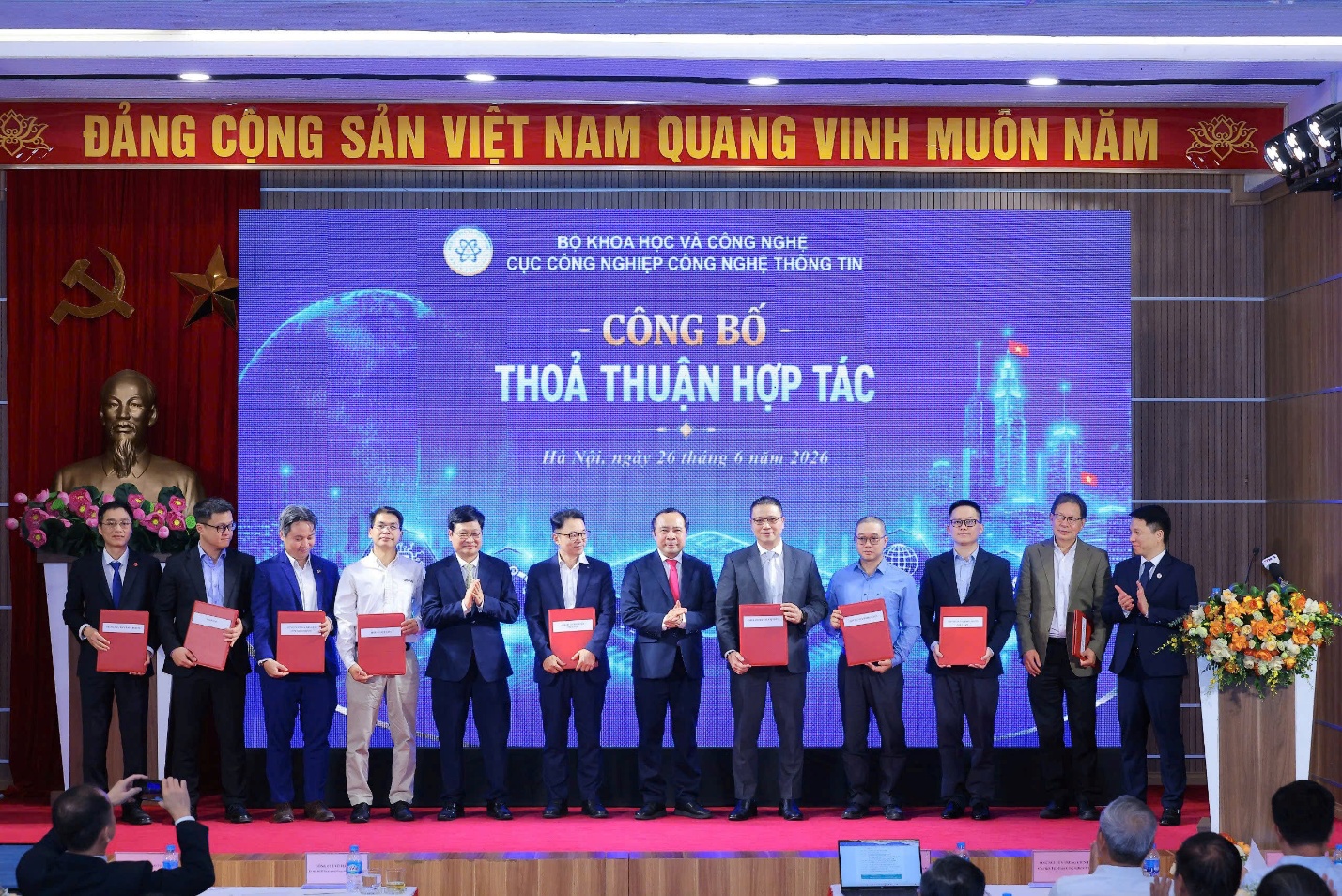
Minister of Science and Technology Vu Hai Quan witnessed the signing of Memorandums of Understanding (MoUs) between partnering entities at the launching ceremony.
Speaking at the event, Minister of Science and Technology Vu Hai Quan stated that Vietnam has now completed a relatively comprehensive legal framework and policy system to drive the semiconductor industry forward, demonstrating the strong determination resolve of both the Ministry and the Government.
According to the Minister, with policies and basic infrastructure now in place, the most critical factor is execution capacity. The semiconductor industry cannot thrive if entities operate in isolation; instead, it requires a tight-knit ecosystem linking research institutes, universities, and businesses.
Furthermore, the Minister suggested that the development of national key laboratories or national research and testing centers should lean toward shared usage rather than fragmented, individual investments. The State stands ready to assist in resolving any hurdles that arise during implementation, but it is crucial that entities proactively take action rather than just pointing out obstacles.
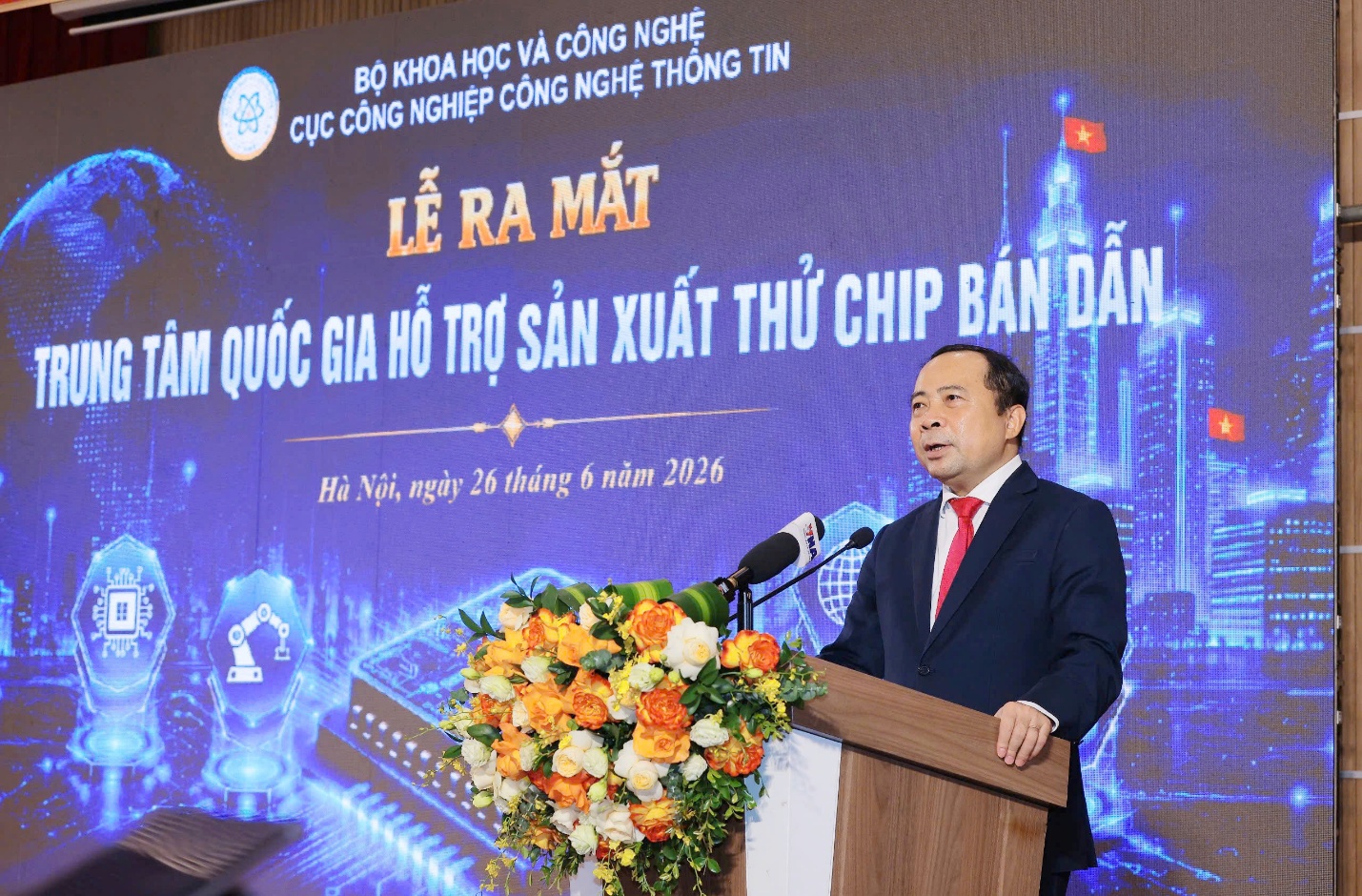
Minister of Science and Technology Vu Hai Quan delivered his speech at the ceremony.
Three Core Questions on the Horizon for Viet Nam's Semiconductor Industry
On this occasion, Minister Vu Hai Quan raised three major questions, inviting the business community and experts to join hands in finding the answers.
First, how can Viet Nam continue to elevate the quality of its semiconductor workforce and turn it into a national competitive advantage? According to the Minister, current bottlenecks lie not only in the shortage of highly qualified lecturers but also in the lack of laboratories and hands-on practical environments for students. He expects businesses to partner with universities in nurturing talent, noting that "only truly outstanding individuals can create breakthroughs for the semiconductor industry."
Second, how can Vietnamese enterprises participate deeper in the global semiconductor value chain? The Minister emphasized that alongside attracting Foreign Direct Investment (FDI) conglomerates, there must be support mechanisms for small and medium-sized enterprises (SMEs) to engage in specific stages of the production chain. While the State can invest in shared infrastructure, testing hubs, and key laboratories, businesses themselves need to define which segment they will enter and what conditions they require, allowing the Government to tailor support policies to reality.
The third question, which the Minister regarded as the most challenging yet strategically vital, is: Which core chip products should Viet Nam select for concentrated investment? The Minister expressed his desire to hear from leading experts to identify product groups where Viet Nam holds a competitive edge, avoiding spread-out investments to establish distinct Vietnamese-branded products on the global semiconductor map.
Minister Vu Hai Quan expressed high expectations that the National Semiconductor Prototyping Support Center will serve as a vital bridge between the State, enterprises, and research/educational institutions, thereby co-writing the success story of Viet Nam's semiconductor industry development in this new era./.,
