



An officer of the market surveillance unit No. 2 inspects a retail outlet on Hang Dao street, Hanoi, in 2025. (Photo: VNA)
Deputy Prime Minister Ho Quoc Dung has directed ministries and agencies to conduct a comprehensive review of laws and regulations governing the enforcement of intellectual property (IP) rights, aiming to promptly address legal bottlenecks, improve enforcement effectiveness and help foster a culture of respect for IP rights in Vietnam.
Chairing a hybrid conference with localities nationwide on June 2 to review the implementation of the Prime Minister’s Official Dispatch No. 38 issued on May 5 on decisively implementing solutions to combat, prevent, and handle acts of infringement of IP rights, the Deputy PM said stronger and more coordinated action is needed to tackle increasingly sophisticated violations, particularly in the digital environment.
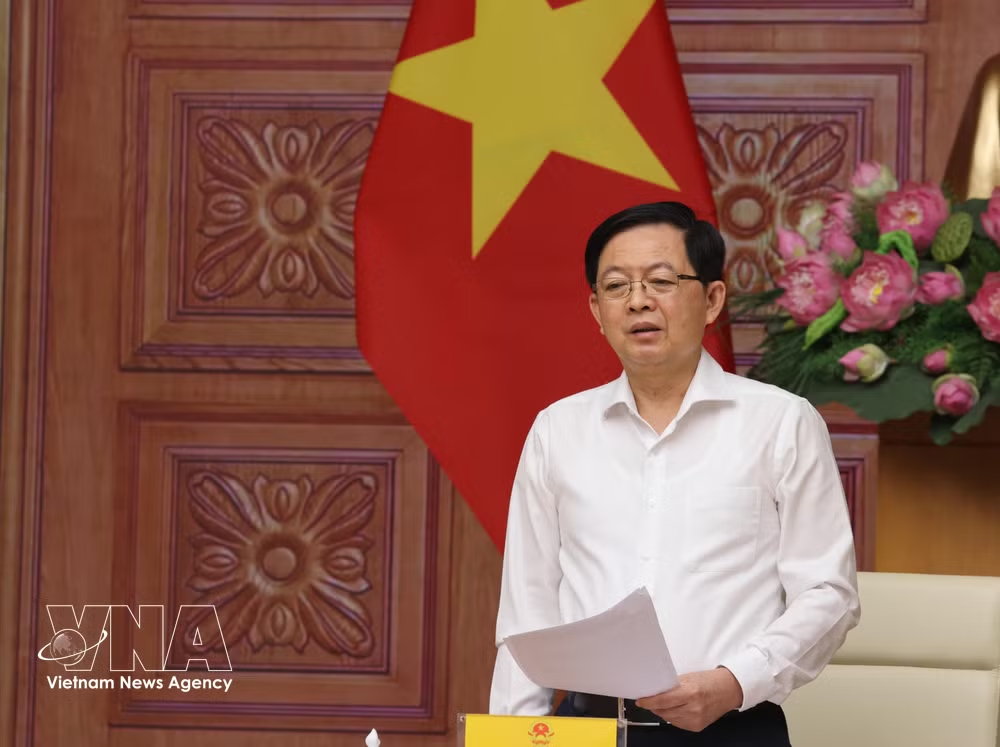
Deputy Prime Minister Ho Quoc Dung speaks at the hybrid conference with localities nationwide on June 2 to review the implementation of the Prime Minister’s Official Dispatch No. 38. (Photo: VNA)
He demanded ministries and agencies to continue reviewing all regulations related to IP rights enforcement, focusing on the Law on Intellectual Property, the Law on Handling Administrative Violations, the Customs Law and related regulations to establish a more coherent legal framework and enhance the effectiveness of addressing IP rights infringements.
For circulars that remain inadequate or have encountered practical implementation challenges, the Deputy PM called for prompt amendments, with completion targeted for the third quarter of 2026.
He emphasised that the review process should create a more coherent legal framework capable of improving the prevention, detection and punishment of IP infringements. The specific target for 2026 is to increase the number of IP infringement cases handled by at least 20% compared with 2025, he said.
Dung asked the Ministry of Science and Technology to coordinate closely with the Ministry of Public Security and other agencies to accelerate the development and operation of a comprehensive national database on IP rights enforcement in a comprehensive, integrated and regularly updated direction aligned with international practices, and fully compliant with applicable legal regulations.
He also instructed the ministry to promote an intersectoral coordination mechanism among relevant ministries and agencies to ensure a synchronised approach to preventing, detecting, and addressing IP rights violations.
The Deputy PM ordered accelerating administrative reforms to facilitate the registration of industrial property rights by organisations and individuals; enhancing guidance and support for businesses and the public in protecting their IP rights in accordance with the law; and organising training programmes to strengthen the capacity and skills of enforcement personnel in identifying and handling IP infringements.
The Ministry of Culture, Sports and Tourism was required to review and amend regulations on copyright and related rights, clarify the responsibilities of relevant agencies in tackling copyright violations - particularly in the digital environment - and strengthen enforcement against the unauthorised use of protected content.
The Deputy PM also called on media outlets to intensify public awareness efforts on IP protection, while publicising infringement cases and enforcement results to strengthen deterrence and prevent violations.
He called on law enforcement agencies to intensify efforts in this work, including stronger criminal prosecution of serious cases, while directing border guards, coast guard forces, customs, tax authorities, and market surveillance units to strengthen inspections and prevent the trade of counterfeit and infringing goods, particularly across borders, on e-commerce platforms, and in import-export activities.
Dung also instructed relevant ministries to enhance coordination and support for IP enforcement, including finalising regulations on e-commerce, ensuring adequate resources for enforcement activities, and proactively engaging international partners to communicate Vietnam’s progress in protecting IP rights and gather external feedback for policymaking.
The Ministry of Education and Training was tasked with incorporating IP awareness into education curricula to promote respect for IP rights from an early age, contributing to fostering a culture of respect for IP rights across society.
According to Deputy Minister of Science and Technology Hoang Minh, authorities detected more than 2,000 IP infringement cases between May 7 - 30, marking a sharp increase from a year earlier and reflecting a shift toward more proactive enforcement. Improved inter-agency coordination also led to a rise in investigations and criminal prosecutions.
Nationwide, the number of administrative cases handled was nearly four times the monthly average in 2025, surpassing the government's target of 20% increase. Trademark infringements accounted for more than 98% of administrative cases, most involving well-known foreign brands. Authorities also handled 34 copyright-related cases, including seven criminal cases, and launched 44 criminal investigations into IP violations, exceeding the total number of such cases prosecuted throughout 2025./.
