

Step by step mastering and developing nuclear technology suited to Viet Nam’s needs
<p style="text-align: justify;">At the regular press conference of the Ministry of Science and Technology on September 30, Dr. Tran Chi Thanh, Director of the Viet Nam Atomic Energy Institute (under the Ministry of Science and Technology), affirmed that the clearest and most effective application of nuclear technology in Viet Nam today is in medicine.</p>
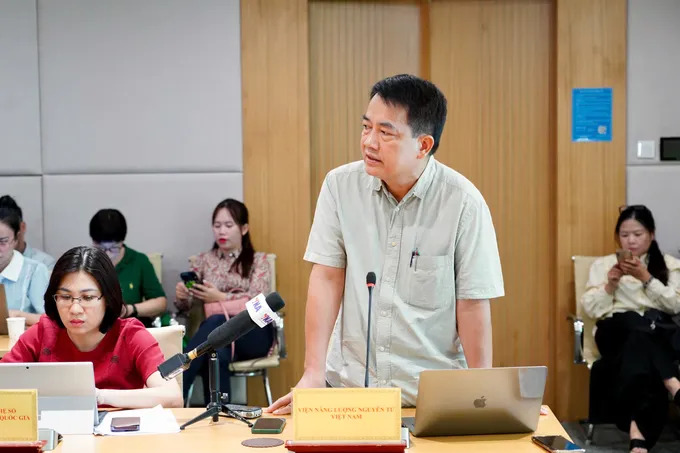
Dr. Tran Chi Thanh, Director of the Viet Nam Atomic Energy Institute speaks at the press conference
New nuclear reactor in Dong Nai to have 30 times the capacity of Da Lat reactor
According to Dr. Tran Chi Thanh, after being restored, upgraded, and put into operation in 1984 with the assistance of the former Soviet Union, the Da Lat Nuclear Research Reactor has been operating for 42 years.
Despite its modest capacity of only 0.5 MW, the Da Lat reactor is evaluated by the International Atomic Energy Agency (IAEA) as one of the most effective low-power research reactors in the world. Currently, the reactor supplies about 80% of the radiopharmaceuticals for hospitals nationwide, primarily serving cancer diagnosis and treatment.
Each year, Viet Nam records approximately 180,000 new cancer cases. While the demand for medical radioisotopes is growing, domestic production capacity remains limited. The project to establish the Center for Nuclear Science and Technology Research, featuring a new research reactor in Dong Nai, is expected to enhance research and production capacity for radioisotopes and advance the deployment of nuclear technique applications.
"To expand our service capacity for healthcare and the region, Viet Nam is implementing a new research reactor project in Dong Nai with 30 times the capacity of the Da Lat reactor, aiming to become a regional center supplying radiopharmaceuticals for cancer diagnosis and treatment," Dr. Tran Chi Thanh stated.
Building in-country capacity for nuclear workforce training
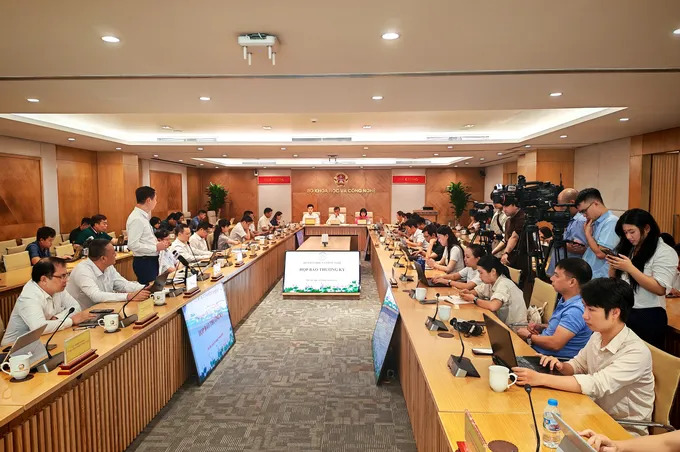
Overview of the press conference
According to Dr. Tran Chi Thanh, Viet Nam has accumulated a foundation of human resources in nuclear technology through many years of research, training, application, and management. However, to meet long-term demand, the existing workforce must be supplemented in terms of quantity, structural balance, and specialized expertise. For nuclear power, the required human resource scale is very large, with each nuclear power plant requiring 600 - 700 personnel (using Western technology) or nearly 1,000 personnel (using Russian technology).
Previously, Viet Nam sent nearly 1,000 officials and students to Russia and Japan for study, but to date, only about 20% have returned to stay with the sector. Therefore, in the coming period, plans should be made to open one to two nuclear technology departments at leading technical universities in Hanoi and Ho Chi Minh City with training programs meeting international standards.
Mr. Tran Quang Tuan, Deputy Director General of the Viet Nam Agency for Radiation and Nuclear Safety (Ministry of Science and Technology), stated that under Decision No. 438/QD-TTg on the Strategy for the Development and Application of Atomic Energy, Viet Nam aims to build a workforce of approximately 2,000 personnel by 2030, increasing to 2,500 by 2035. This force comprises four core pillars: state management, research and development, technical support, and direct nuclear operations workforce.
According to Mr. Tran Quang Tuan, as this is a high-tech and relatively new field in Viet Nam, the shortest path is to strengthen international cooperation and send personnel for training in advanced nations to quickly fill experience gaps. However, Viet Nam cannot rely entirely on sending people abroad and must instead build domestic training capacity. The goal is to gradually form a workforce capable of researching, designing, mastering, improving, and developing nuclear technology tailored to Viet Nam’s needs./.