

Minister Vu Hai Quan: AI must deliver tangible value for citizens and businesses
<p style="text-align: justify;">Minister of Science and Technology Vu Hai Quan emphasized that the true value of artificial intelligence (AI) must be measured by better public services, higher productivity, stronger enterprises, and an improved quality of life - rather than the number of strategies, pilot projects, or new models.</p>
Viet Nam aims to master AI, driving this technology from isolated projects into the broader socio-economic landscape, anchored on human-centric development and global collaboration.
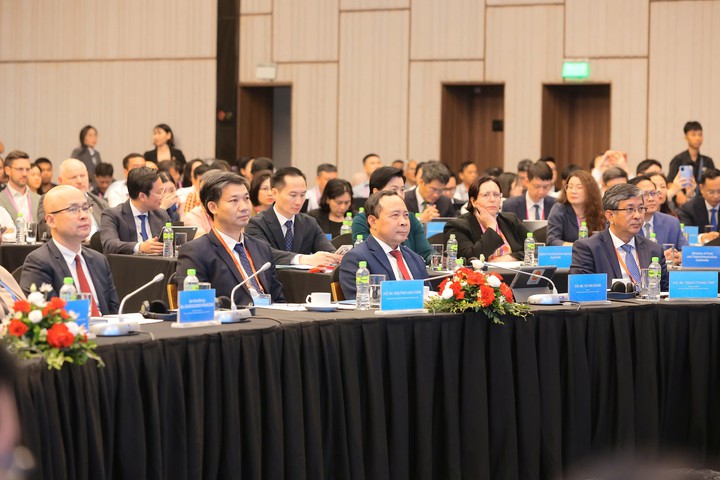
Delegates attending the conference.
This message was delivered by Minister Vu Hai Quan at the Opening Ceremony of Viet Nam International Digital Week 2026 (VIDW 2026), themed "Building Smart Connectivity, Governing AI, and Enabling AI Transformation," jointly organized by the Ministry of Science and Technology of Viet Nam and the People's Committee of Quang Ninh City on October 28, 2026, in Quang Ninh.
Scaling AI from isolated projects to the entire socio-economic ecosystem
Speaking at the ceremony, Minister Vu Hai Quan noted that AI is not merely a new technology, but a transformative force reshaping how economies grow, how governments serve citizens, and how nations compete and cooperate. Alongside massive opportunities, AI also introduces new risks and the potential to widen development gaps.
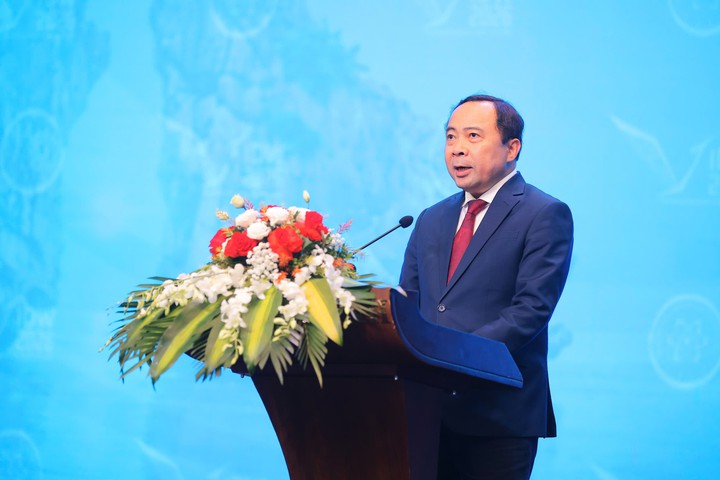
Minister Vu Hai Quan affirmed that Viet Nam identifies science, technology, innovation, and digital transformation as the primary drivers of its new growth model.
Minister Vu Hai Quan emphasizes that Viet Nam identifies science, technology, innovation, and digital transformation as the primary drivers of its new growth model.
According to the Minister, smart connectivity, AI governance, and enabling AI transformation are three strategic issues vital to the future of AI development and international cooperation:
Smart connectivity as the foundation: AI requires next-generation networks, data centers, and computational capacity. With finite resources, nations must simultaneously meet the demand for universal connectivity and invest in high-capacity infrastructure, leverage private sector participation, and ensure green, energy-efficient infrastructure.
AI governance as the pillar of trust: Governance approaches must strike a balance between flexibility and legal certainty, as well as between fostering innovation and protecting citizens. As AI and data transcend national borders, compatible governance frameworks and trusted data flows become increasingly paramount.
AI transformation delivering tangible outcomes: The true value of AI must be measured by enhanced public services, increased productivity, more resilient businesses, and improved quality of life—not simply by strategy documents, pilots, or experimental models. The Minister stressed the need to transition from isolated AI projects to full-scale socio-economic transformation.
Under the vision of "AI for humanity, AI for all, mastered by Viet Nam and co-created with the world," Viet Nam is focusing on three key commitments:
-Strengthening national ai capabilities, particularly fostering high-quality human resources;
-Building an Open Innovation Environment, adopting risk-based management and regulatory sandboxes;
-Expanding international cooperation: Advancing collaborative efforts in research, training, data sharing, standards, and practical AI applications.
The Minister underscored that self-reliance does not mean acting in isolation; rather, it means building internal capacities to engage in equal partnerships, contribute knowledge, and share value. He called on stakeholders to identify pragmatic areas of collaboration, connect partners, and turn discussions into concrete actions.
Accelerating AI and digital tech applications in key sectors
Speaking at the event, Mr. Nguyen Van Cong, Vice Chairman of the Quang Ninh People's Committee, stated that Quang Ninh regards science, technology, innovation, and digital transformation as pivotal levers to raise productivity, growth quality, and sustainable development. The province is concentrating on developing digital infrastructure, harnessing data, and accelerating the application of AI and emerging technologies in urban management, tourism, industrial production, logistics, border-gate logistics, and environmental protection.
Furthermore, Quang Ninh is directing resources toward developing breakthrough economic spaces and models, including smart border gates, concentrated digital technology zones, and specialized economic zones aligned with the province's development orientation.
Quang Ninh seeks to attract investors, technology firms, research institutions, and international partners to co-develop new products and services, transfer technologies, and train a high-skilled workforce—thereby establishing scalable application models that generate practical economic value.
VIDW 2026 aims to translate commitments on connectivity, governance, and AI deployment into concrete action programs, catalyzing international cooperation and unlocking new growth opportunities. Guided by a human-centric philosophy, technology mastery, and global partnership, Viet Nam aims to build a trusted, competitive AI ecosystem where technological value is measured not only by engineering breakthroughs, but by the tangible resolution of real-world challenges, the quality of citizens' lives, and the overall competitiveness of businesses and the economy./.